Upcoming Events
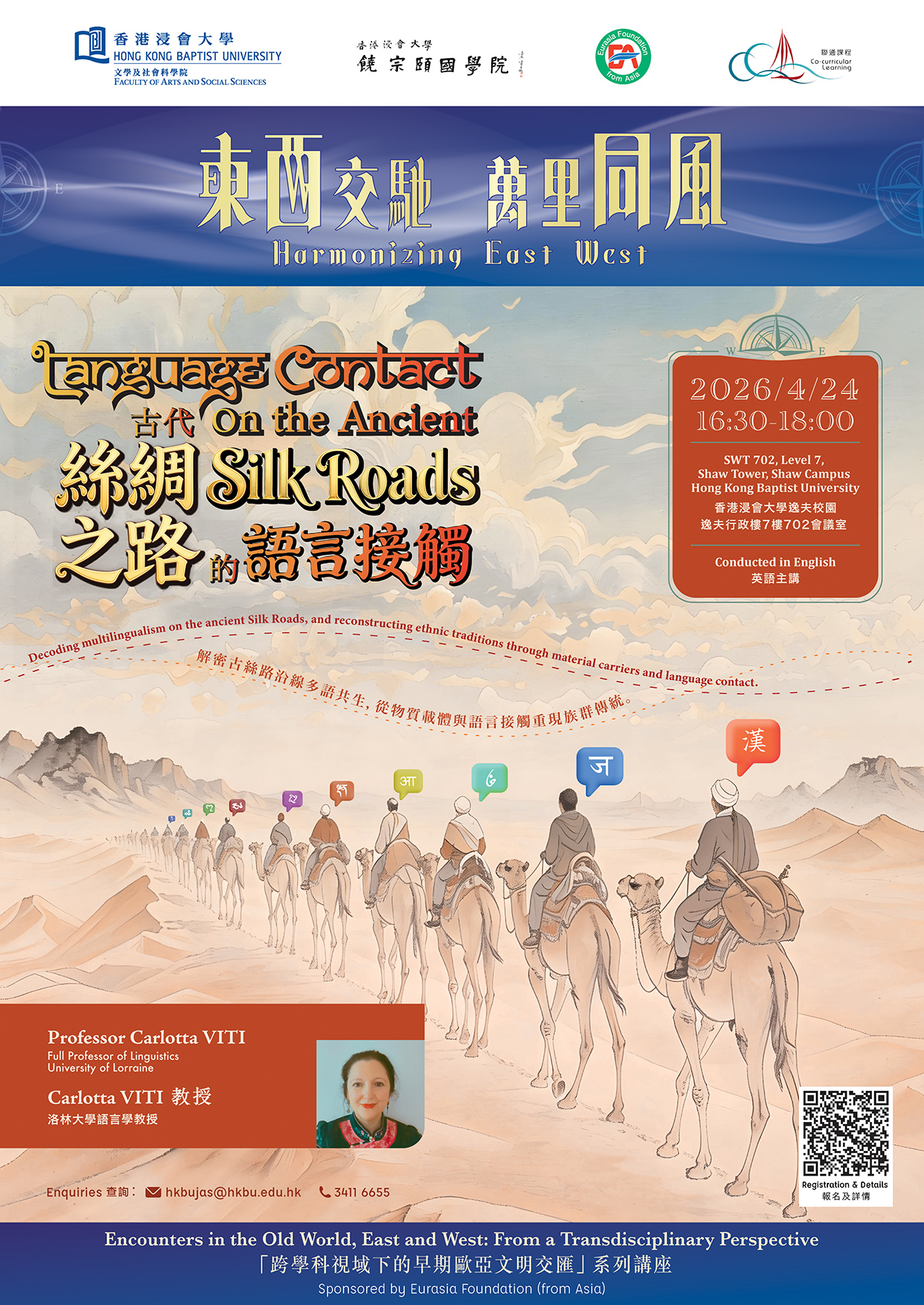
Professor Carlotta VITI: Language Contact on the Ancient Silk Roads (2026/4/24)

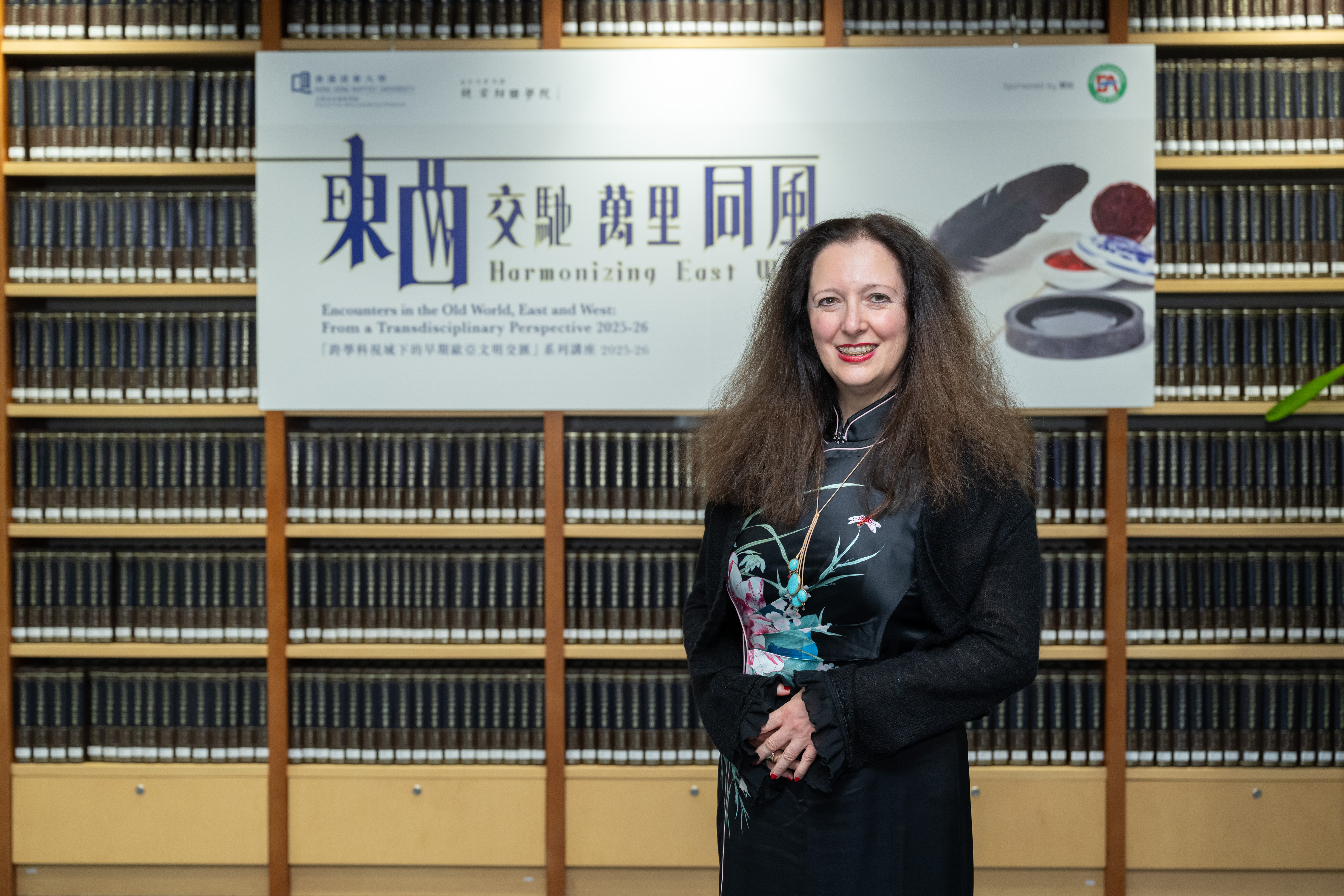
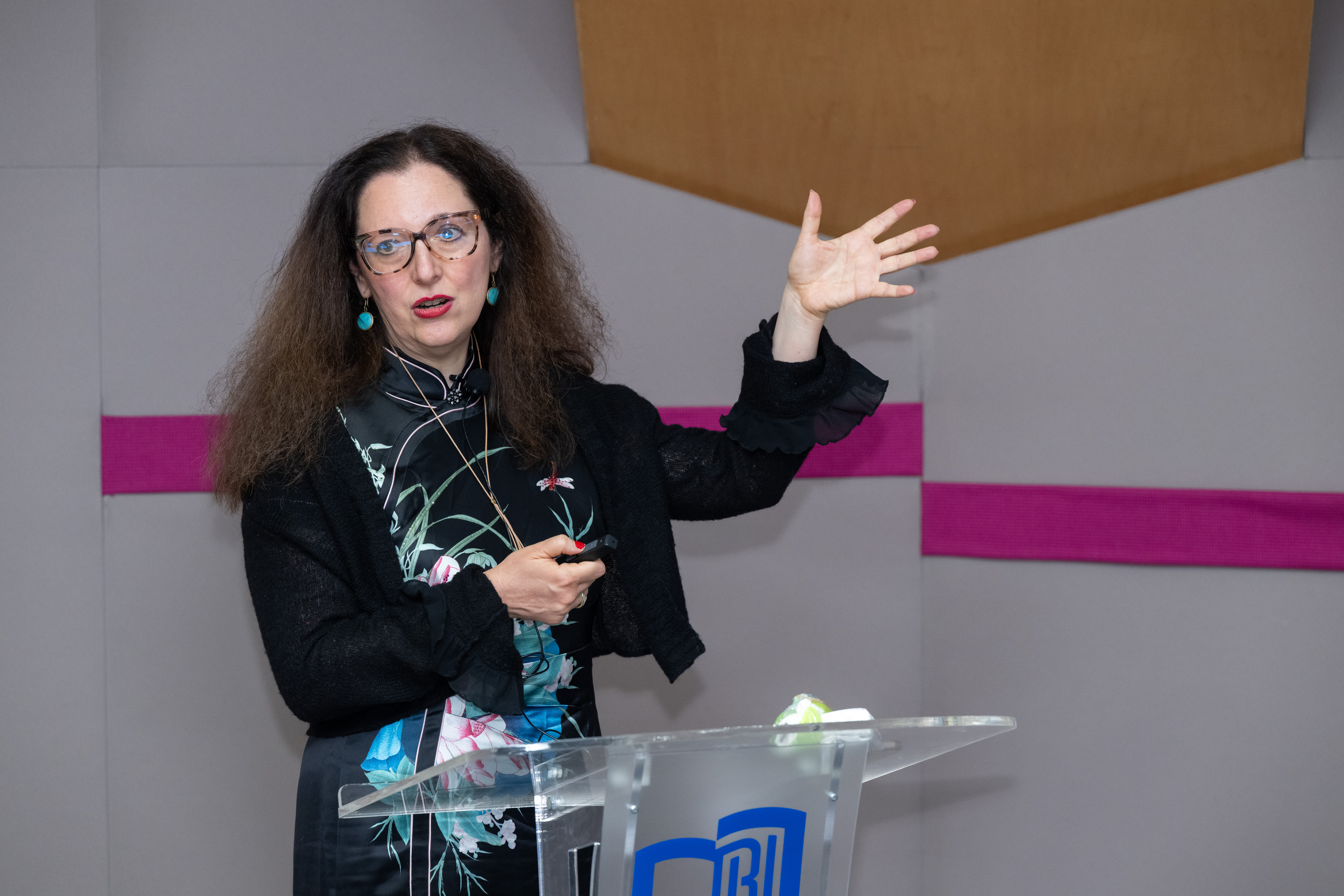
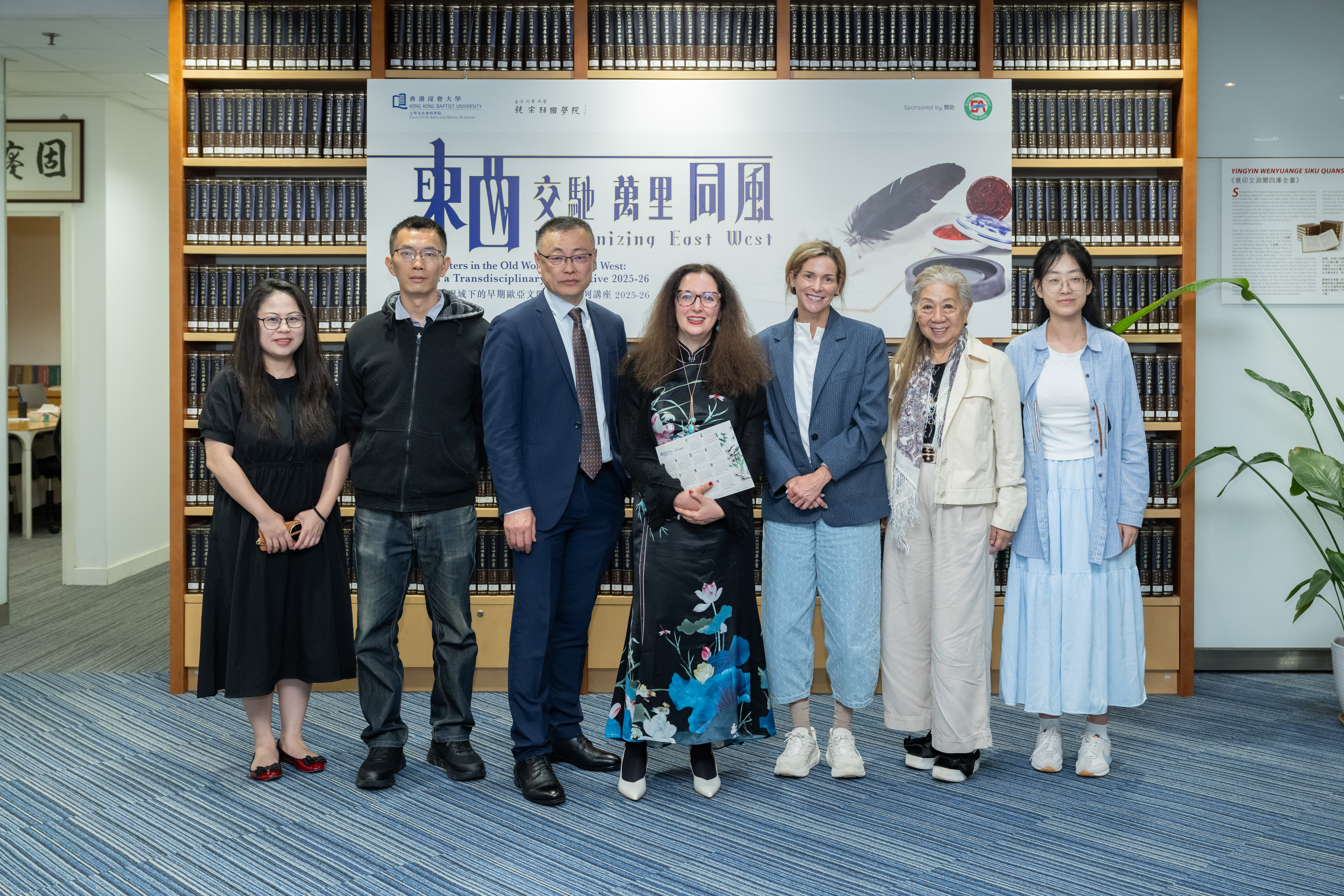
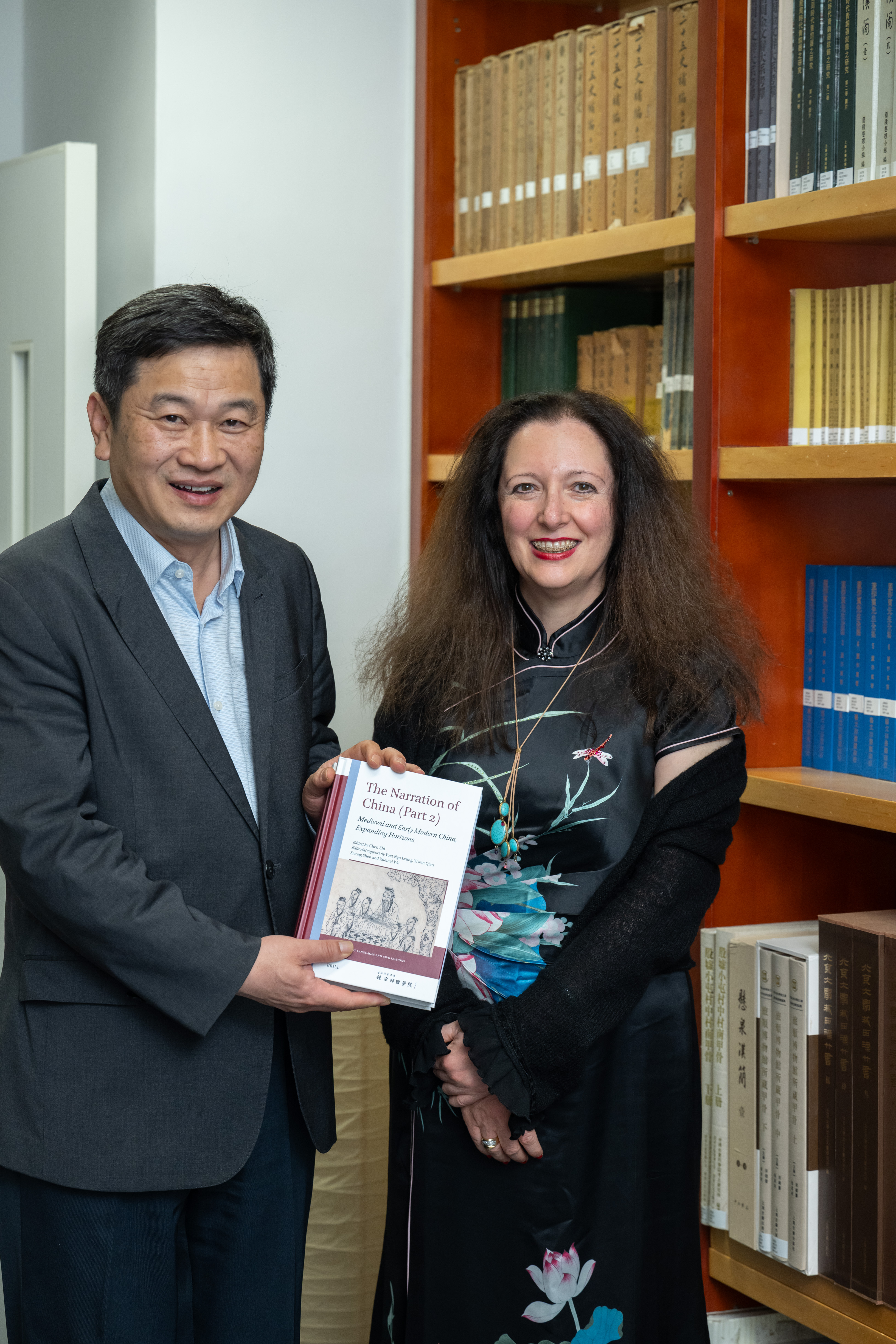
The Jao Tsung-I Academy of Sinology successfully held the 13th lecture in its “Encounters in the Old World, East and West: From a Transdisciplinary Perspective” series on 24 April, supported by the Eurasia Foundation (from Asia). The event featured Professor Carlotta Viti, Full Professor of Linguistics at the Université de Lorraine, France, who delivered a lecture titled “Language Contact on the Ancient Silk Roads”. The Academy was honoured to invite Professor Chen Yi Samuel, Associate Professor of Practice (Urban Heritage and Sustainability), Department of History, The University of Hong Kong, to serve as the moderator for this lecture.
Professor Viti began by introducing the historical context of the Silk Roads as a medium for the exchange of material and cultural products. She pointed out that the Silk Roads not only facilitated the spread of religions, philosophies, and art, but also served as a vibrant arena for large-scale language contact and change. The lecture specifically explored the complex phenomenon of mismatches between the diverse languages and scripts along the Silk Roads. On one hand, the same script was often borrowed by multiple ethnic groups. She used the Edicts of Ashoka as an example to demonstrate how the Indian Brahmi script served as the source for Sanskrit, Tocharian, and even Tamil and Thai. On the other hand, the same language frequently used different scripts based on religious or identity needs, as illustrated by Sogdian, which was written using the Sogdian, Syriac, Manichaean, and Brahmi scripts. Professor Viti then proceeded to analyse lexical contact, examining loanwords, Wanderwörter, and calques and honorifics developed under the influence of Asian languages. She further delved into phonological contact and case systems, specifically analysing and comparing Indo-European and Altaic languages, group inflection, compound structures, converbs, and the reinforcement of SOV (Subject-Object-Verb) word order in Central Asian languages. Professor Viti challenged the assumption prevalent in historical linguistics that prioritises internal explanations for language change. She argued that the linguistic evolution observed on the Silk Roads demonstrates that external contact and internal change follow the same linguistic principles, reinforcing rather than excluding each other. She concluded by advocating for a more comprehensive and multidimensional approach to explanation in historical disciplines.
Professor Chen Zhi, Director of the Academy, remarked that Professor Viti’s lecture, by integrating interdisciplinary findings from historical linguistics, philology, and the history of civilisational exchange, reveals the complex and multifaceted historical factors behind language change. It thus amply demonstrates the paradigmatic value of a cross-cultural perspective in contemporary humanities research.
Lecture Review:
HKBUtube:https://hkbutube.lib.hkbu.edu.hk/inner.php?id=BTS-101298