Upcoming Events
Revisiting and Reframing: Professor Wong Man Kong Concludes the "Early Eurasian Encounters" Lecture Series

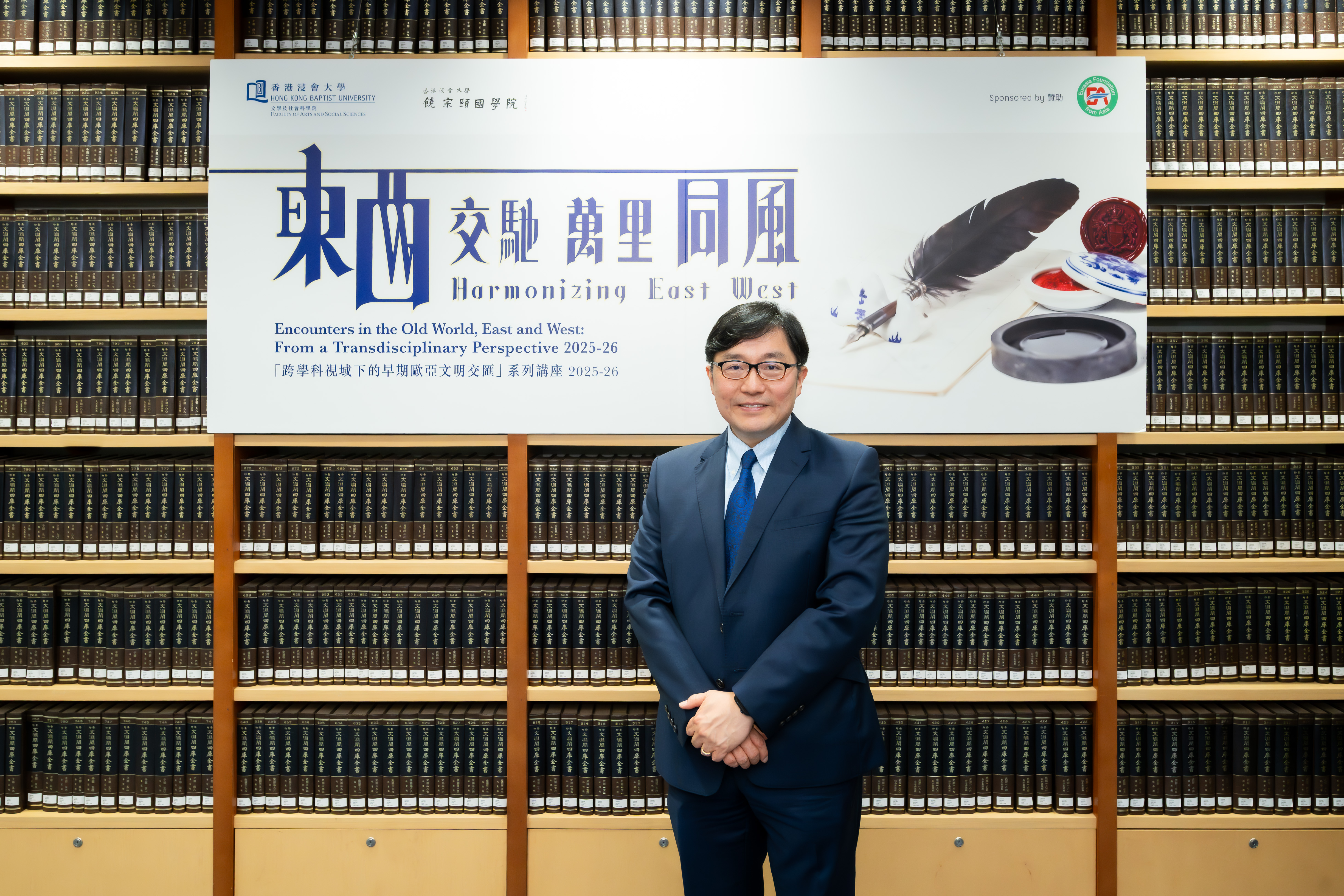
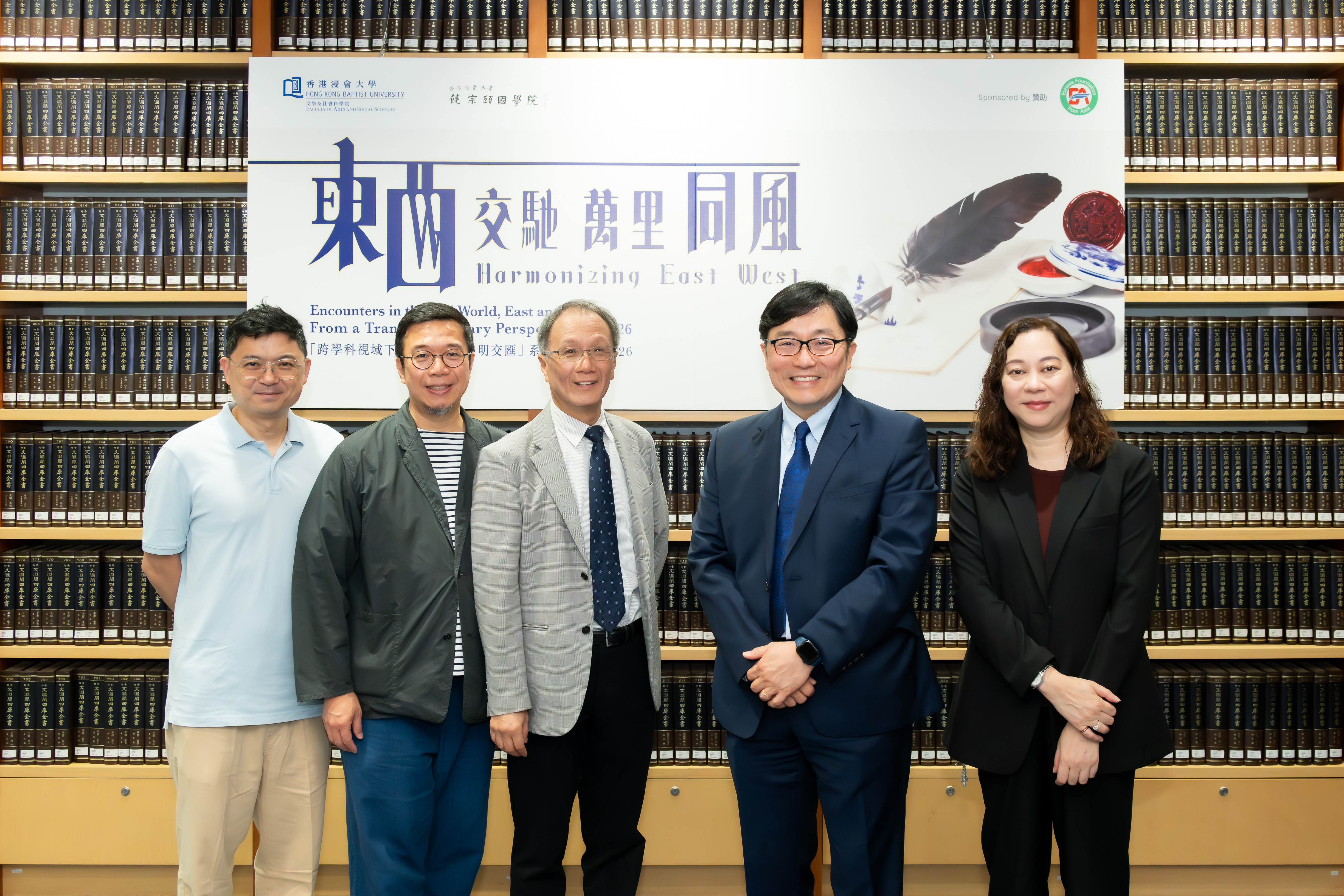
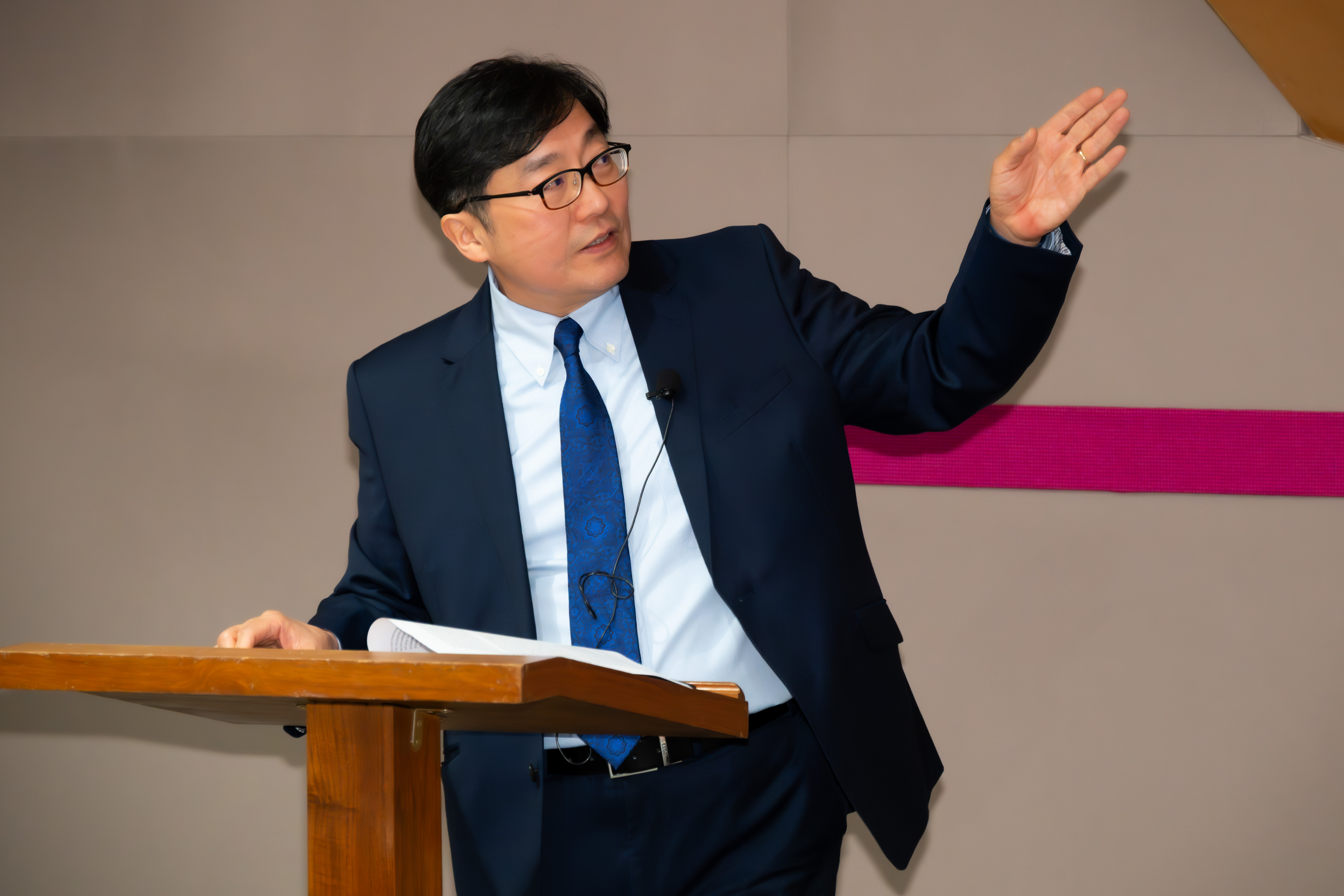
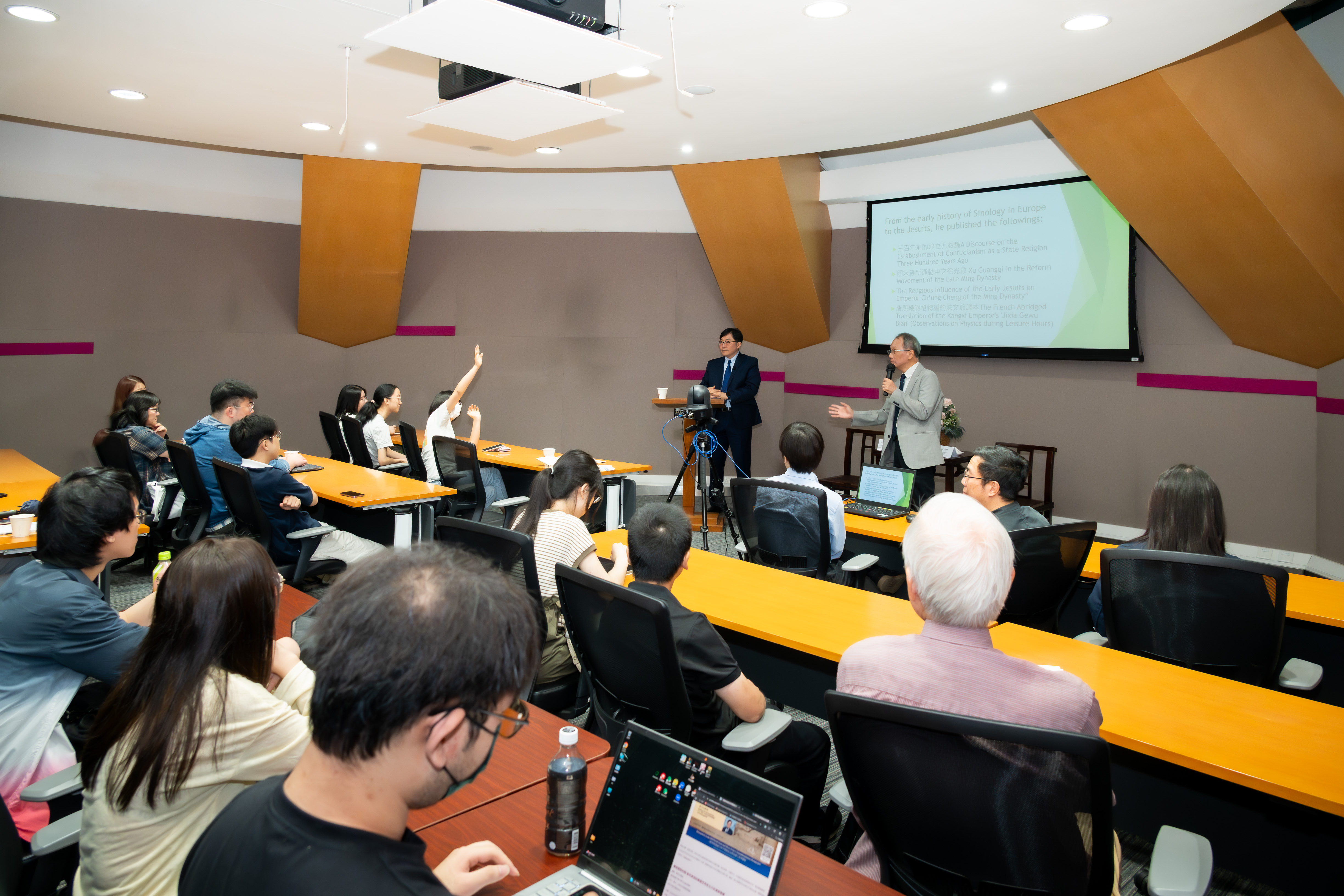
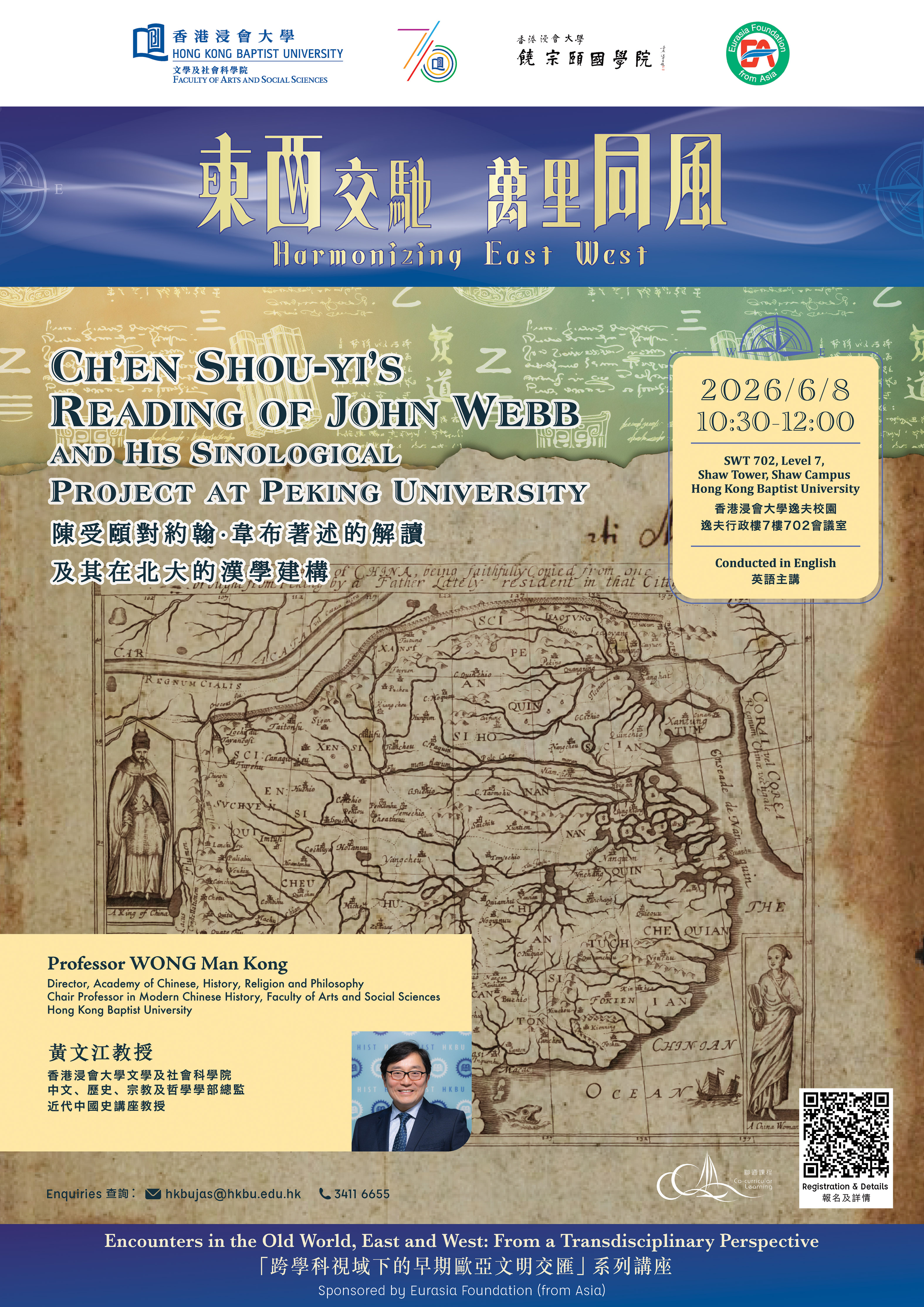
The Jao Tsung-I Academy of Sinology at Hong Kong Baptist University (HKBU) organized a 15-lecture series titled "Encounters in the Old World, East and West: From a Transdisciplinary Perspective" for the 2025-26 academic year, generously sponsored by the Eurasia Foundation from Asia. On June 8, 2026, the series concluded with a final lecture by Professor Wong Man Kong, Director of the Academy of Chinese, History, Religion and Philosophy and Chair Professor in Modern Chinese History at HKBU. His talk, "Ch'en Shou-yi's Reading of John Webb and His Sinological Project at Peking University," was moderated by Professor Hon Tze-ki of Beijing Normal-Hong Kong Baptist University and drew a full house.
As the closing lecture, Professor Wong built on the series' opening talk by Professor Zhang Longxi, Distinguished Li De Chair Professor of Peking University’s Yenching Academy, Xiaoxiang Chair Professor of Comparative Literature at Hunan Normal University, which examined John Webb and the English imagination of China during the Restoration. Professor Wong extended the inquiry to ask how 20th-century Chinese scholars reinterpreted and constructed Sinology, creating a cross-cultural dialogue spanning 17th-century European intellectual circles and 20th-century Chinese academia.
Professor Wong pointed out that John Webb understood China through its language, political system, philosophy, and the origins of civilization—not merely as an exotic fantasy. He specifically corrected a common belief: the first systematic scholarly examination of Webb in the Chinese academic world was Chen Shou-yi's 1935 English-language study, which predated Qian Zhongshu's 1937 Oxford thesis, thereby helping to reassess Chen Shou-yi's place in modern Sinology. Using "dovetail" as a key concept, Professor Wong proposed a two-fold relationship: first, how 17th- and 18th-century Europe embedded "China" into its own knowledge structures; second, how Chinese scholars in the 1930s reinterpreted early European views of China. Thus, the lecture advanced the question from "How did Europe understand China?" to "How did Chinese scholars understand Europe's understanding of China?" Professor Wong also traced Chen Shou-yi's academic trajectory: having studied and taught at Lingnan University in his early years, then pursued advanced studies at the University of Chicago, before joining Peking University in 1931. At a time when Hu Shih and others were promoting reforms at Peking University, Chen's interpretation of Webb's writings was not only a case study of early British views of China but also an important practice through which a Chinese scholar actively looked back at European Sinology and sought to re-establish his own academic agency. Finally, Professor Wong emphasized that Webb's thesis regarding Chinese as the "primitive language" should not be dismissed merely as an outdated or fanciful linguistic hypothesis, but rather must be re-understood against the triple background of the decline of Sino-Babylonianism, the anti-Christian movement, and the marginalization of Western literature and history as disciplines within Chinese academia.
Professor Wong's lecture offered valuable insights for researchers in literature, history, philosophy, religion, translation, and international relations. As the final session of the 15-part series, it not only provided a fitting conclusion but also addressed the series' core theme: early Eurasian encounters were never a one-way transmission of knowledge or cultural acceptance, but an ongoing process of translation, interpretation, misunderstanding, response, and reframing, constantly generating new intellectual propositions.
Lecture Review:
HKBUtube:https://hkbutube.lib.hkbu.edu.hk/inner.php?id=BTS-101300